

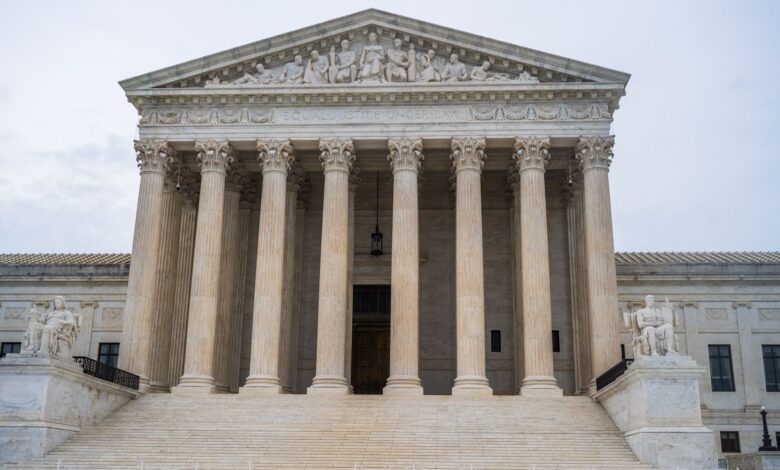
The Constitution is not vague about who taxes imports. Article I, Section 8 gives Congress the power to lay and collect duties and to regulate commerce with foreign nations. For most of the past century, lawmakers have been handing pieces of that authority to the White House. The Supreme Court’s tariff ruling has put a hard question in front of them: how much of that handoff was ever supposed to happen?
Congress now has to decide whether it wants the job back.
The dispute centered on whether the International Emergency Economic Powers Act, a 1977 law written largely with sanctions and asset freezes in mind, can support sweeping import taxes. Whatever one makes of the justices’ reasoning, the practical effect reaches well beyond one statute. The ruling turns tariff authority into a question of exactly what Congress wrote and what it meant to delegate. That is a problem for lawmakers, because they wrote many of these laws broadly and with few guardrails, and they rarely revisited them.
A Century of Delegation Comes Due
The story of congressional trade power is largely a story of Congress giving it away. After the Smoot-Hawley tariffs of 1930, lawmakers concluded that writing individual tariff rates on the House and Senate floors invited logrolling and retaliation. The Reciprocal Trade Agreements Act of 1934 began shifting rate-setting to the executive branch, and later statutes built on that model. Section 232 of the Trade Expansion Act of 1962 allows tariffs on national security grounds. Section 301 of the Trade Act of 1974 targets unfair foreign practices. Section 122 of the same law allows temporary tariffs to address balance-of-payments problems. Each delegation made sense in its moment, and together they created a toolbox far larger than most voters realize.
What changed in recent years is that presidents began reaching for statutes that never mentioned tariffs at all. That is the logic behind the legal fight over emergency powers. A delegation of power to “regulate” international transactions in a financial emergency is a different thing from a delegation of the power to tax, and the courts have long held that taxing is the most jealously guarded of congressional prerogatives. When a president stretches an old law to fit a new use, the dispute is really about whether Congress’s silence counts as consent.
The ruling answers that question in a way lawmakers cannot easily ignore. If a court says a president needed clearer authorization, then the remedy is no longer a legal brief. It is a bill, a markup, and a recorded vote. Members who spent years criticizing tariffs from the sidelines, or praising them from the sidelines, now face the prospect of being asked to put their names to a policy. Some will welcome that. Many have built careers on avoiding exactly that kind of vote.
The Options on the Table
Congress has roughly three paths, and none is free of cost. The first is to ratify the tariffs that were challenged, writing the president’s trade actions into law so they stand on firmer ground. That would give the policy durability, but it would also make every lawmaker who votes yes an owner of whatever happens to consumer prices, supply chains, and retaliation against exporters. The second path is reform: bipartisan proposals have circulated in the Senate that would require congressional approval for tariffs imposed under emergency declarations, or would make them expire after a set period unless lawmakers vote to extend them. The third path is to do nothing and let the executive branch rely on the authorities that clearly survive.
That third path is the most likely default, and the reason is structural. Congress already has a built-in check on emergency declarations through the National Emergencies Act, but after the Supreme Court’s 1983 decision in INS v. Chadha struck down the legislative veto, the mechanism for ending an emergency became a joint resolution that the president can veto. Overriding a veto takes two-thirds of both chambers. A check that requires a supermajority to overrule the person being checked is not much of a check, and lawmakers know it. Even symbolic disapproval votes have mostly shown how hard it is to move from disagreement to binding law.
Politics adds a second layer of friction. A member from a farm state may want tariff relief for exporters but fear a primary challenge for crossing a president of the same party. A member from a manufacturing district may like tariff protection but dislike the idea of voting for higher input costs. Delegation has always offered a quiet way out of this bind: let the president decide, then praise or blame the result as convenient. Taking the power back removes that exit. Lawmakers would have to explain, in public, why a particular country, product, or rate was chosen, and that is a harder conversation than a press release about executive overreach.

The Clock Already in the Statute
The most telling detail may be one Congress wrote itself in 1974: under Section 122, a president can impose a tariff of up to 15 percent for 150 days, and after that only an act of Congress can extend it.
Frequently Asked Questions
What does the Constitution say about who controls tariffs?
Article I, Section 8 gives Congress the power to lay and collect duties and to regulate commerce with foreign nations. Presidents act on tariffs only through authority Congress has delegated by statute.
Can Congress take back its tariff powers?
Yes. It can pass laws that narrow or repeal earlier delegations, require approval for emergency tariffs, or set expiration dates unless lawmakers vote to extend them. Any such bill would still face the possibility of a presidential veto.
Does the ruling end all tariffs?
No. Other statutes, including Section 232, Section 301, and Section 122, give presidents separate and clearer tariff authority, each with its own limits.