

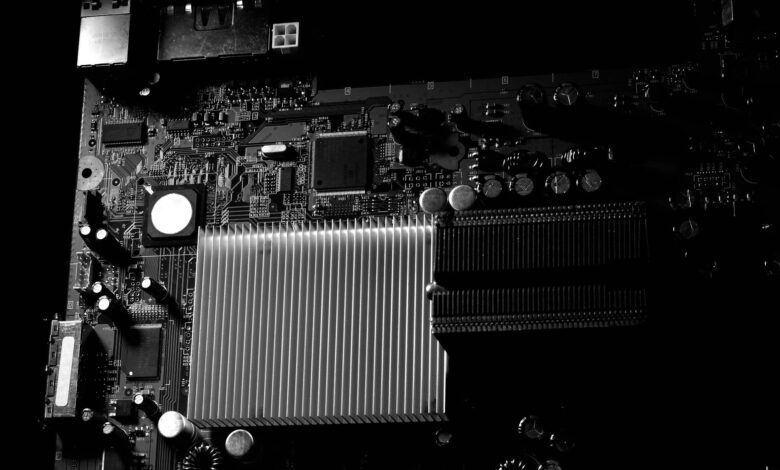
Intel faces mounting pressure to consider a radical restructuring that would separate its chip manufacturing operations from its design business, a move that could reshape one of the semiconductor industry’s most established players. The company’s board has reportedly begun evaluating whether splitting these core functions might unlock value and help Intel compete more effectively against rivals like Taiwan Semiconductor Manufacturing Company and Samsung.
This potential separation represents a dramatic shift for Intel, which has historically maintained tight integration between designing chips and manufacturing them in its own facilities. The company’s foundry services division, which manufactures chips for other companies, has struggled to gain significant market share while Intel’s own processor designs have faced intense competition from AMD and Apple’s custom silicon.
Financial Pressures Drive Strategic Review
Intel’s financial performance has underwhelmed investors in recent quarters, with the company losing ground in both the data center and consumer processor markets. The firm’s stock price has declined significantly over the past two years as competitors have gained market share with more advanced chip architectures and manufacturing processes.
The manufacturing side of Intel’s business requires massive capital investments to stay competitive in the race toward smaller, more efficient chip production. Building and upgrading fabrication facilities can cost tens of billions of dollars, with each new generation of manufacturing technology demanding increasingly sophisticated equipment and expertise.
Industry Precedent and Strategic Options
Other major semiconductor companies have already embraced the fabless model, focusing exclusively on chip design while outsourcing manufacturing to specialized foundries. Companies like Nvidia, Qualcomm, and AMD have thrived under this approach, achieving higher profit margins and greater flexibility in their manufacturing strategies.
A split could allow Intel’s design teams to focus entirely on developing competitive processors without the burden of maintaining expensive manufacturing facilities. The separated manufacturing division would be free to pursue contracts with other chip companies, potentially increasing utilization rates at Intel’s fabs and generating additional revenue streams.

The foundry business faces different competitive dynamics than chip design, requiring expertise in manufacturing processes, yield optimization, and customer service rather than architectural innovation. Separating these functions might enable each division to develop specialized capabilities and pursue distinct strategic priorities.
Intel’s current integrated model has advantages, including greater control over the entire production process and the ability to optimize designs specifically for its manufacturing capabilities. However, these benefits have not prevented the company from falling behind competitors in recent years, particularly in the race to develop the most advanced manufacturing processes.
Market Dynamics and Competitive Landscape
The global semiconductor market has evolved rapidly, with specialized companies often outperforming integrated players in their respective niches. Taiwan Semiconductor Manufacturing Company dominates the contract manufacturing space by focusing exclusively on production, while design-focused companies like Nvidia have achieved remarkable growth by partnering with the best available manufacturers.
Intel’s attempts to expand its foundry services business have met with limited success, partly because potential customers view Intel as a competitor in the chip design space. A separation could eliminate this conflict of interest and make Intel’s manufacturing capabilities more attractive to external customers.
Implementation Challenges and Timeline Considerations
Executing such a separation would present enormous logistical and financial challenges, requiring the division of shared resources, intellectual property, and personnel across two distinct organizations. The process could take several years to complete and would likely face regulatory scrutiny given Intel’s significant role in the global semiconductor supply chain.
The timing of any potential split remains uncertain, with industry watchers suggesting that Intel’s board is still in the early stages of evaluating this option. The company has not made any official announcements regarding a separation, and such a move would require careful coordination with customers, suppliers, and government stakeholders.
The semiconductor industry’s cyclical nature adds another layer of complexity to these considerations, as major strategic decisions must account for fluctuating demand patterns and evolving technology requirements. Intel’s leadership faces the challenge of positioning the company for long-term success while managing immediate competitive pressures and investor expectations.
Frequently Asked Questions
Why is Intel considering splitting its manufacturing and design operations?
Intel faces competitive pressure and declining market share, leading to evaluation of whether separation could improve focus and unlock value.
How would an Intel split affect the semiconductor industry?
A split could increase competition in both chip design and manufacturing, potentially benefiting customers through improved services and pricing.