
Tesla Enters the Ride-Hail Arena
Tesla’s robotaxi service, operating under the Cybercab brand, went live in Austin, Texas, marking the company’s first real foray into commercial autonomous ride-hailing. The launch – years in the making and repeatedly delayed – puts Elon Musk’s vision of a driverless fleet directly in competition with Waymo, which has been running paid autonomous rides in San Francisco, Los Angeles, and Phoenix since 2022. The timing is notable: Tesla is entering a market that Waymo has spent nearly a decade and billions of dollars building.
The rollout is limited in scope for now, with a small fleet of Cybercabs operating in a geofenced area of Austin and available only to a select group of invited users. But the signal to the market is clear. Tesla is no longer just an electric vehicle company threatening to become a robotaxi operator – it is one.
What Tesla Is Betting On
Tesla’s autonomous driving approach has always diverged sharply from Waymo’s. Where Waymo relies on a combination of lidar, radar, and cameras with detailed pre-mapped road data, Tesla uses a camera-only vision system trained on data from its massive fleet of consumer vehicles. Musk has argued for years that cameras alone, combined with enough real-world training data, can achieve the kind of generalization that lidar-dependent systems struggle with. The Austin launch is the first commercial test of whether that bet pays off at scale.
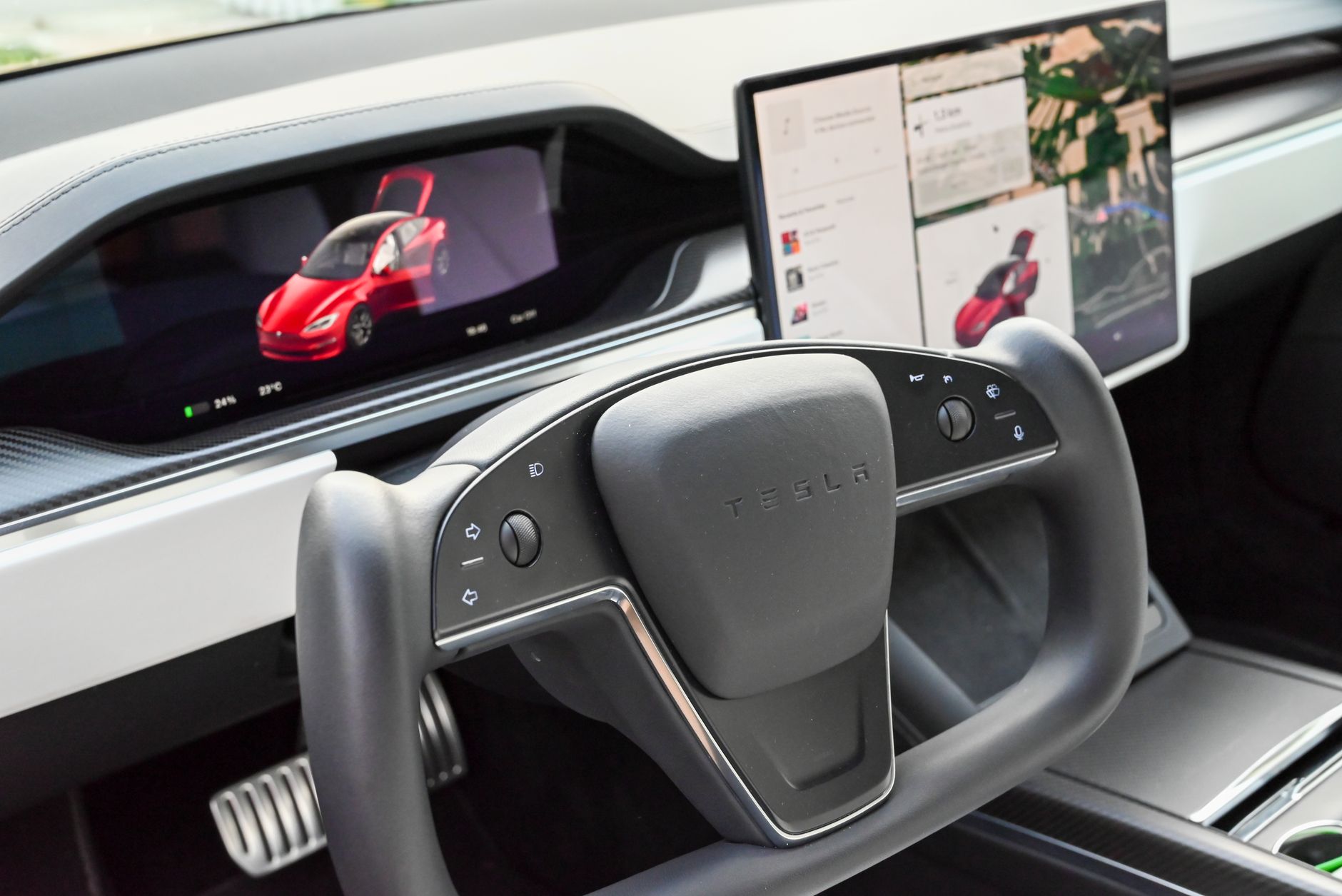
The Cybercab itself is purpose-built for driverless operation – no steering wheel, no pedals. That design choice signals that Tesla is not hedging toward a hybrid model where a safety driver can take over. It is a full commitment to Level 5 autonomy in controlled conditions, which raises the operational risk but also eliminates the cost of human backup drivers that competitors still carry in many markets.
Tesla’s cost structure could become its most disruptive advantage. Without the hardware expense of lidar sensors and without paying safety drivers, the per-mile operating cost of a Cybercab fleet could be substantially lower than current robotaxi competitors. That margin gap matters because ride-hailing has historically been a business where unit economics, not brand loyalty, determine long-term survival. If Tesla can offer cheaper rides while maintaining acceptable safety records, the pricing pressure on Waymo and other players would become serious.
Waymo’s Lead Is Real, but Not Untouchable
Waymo’s head start is genuinely substantial. The company has logged tens of millions of autonomous miles across multiple cities, navigated regulatory approvals in some of the most complex urban environments in the country, and built operational infrastructure that took years to construct. Its safety record, while not perfect, has been strong enough to sustain public and regulatory confidence. That is not a small achievement – it is the foundation of the entire commercial case for robotaxis.
But a head start in technology does not automatically translate into a durable market position when a well-capitalized competitor arrives with a different cost model. Waymo is backed by Alphabet, which gives it deep resources, but it has also spent heavily for years without generating the kind of revenue that justifies the investment at scale. Tesla, by contrast, can potentially cross-subsidize its robotaxi operation through vehicle sales and its existing energy and software businesses while it builds out the service.
The Regulatory Variable Nobody Can Price In
Both companies face the same ceiling: regulatory approval moves slowly and unevenly across U.S. cities and states. Waymo’s multi-year licensing process in California is a template for how painstaking that approval track can be. Tesla will need to replicate that process in every new market it enters, and its camera-only system will face scrutiny from regulators who have grown accustomed to evaluating lidar-based safety cases. The Austin launch sidesteps some of that friction by operating in Texas, which has relatively permissive autonomous vehicle laws, but national scale requires navigating a patchwork of state-level rules that have no uniform standard.
There is also the question of public trust, which no regulatory framework can manufacture. Waymo has earned its reputation through years of incident data and careful public communication. Tesla carries a different kind of baggage – a history of Autopilot-related accidents and aggressive marketing of features that were not fully ready. Convincing riders to sit in a fully driverless Cybercab requires a level of brand trust that Tesla will need to build separately from its reputation as an EV maker.
The competitive dynamics also extend beyond the U.S. market. Chinese autonomous vehicle companies, including Baidu’s Apollo Go service, are already operating large robotaxi fleets in Chinese cities at costs that would be difficult to match even with Tesla’s lean hardware model. If autonomous ride-hailing becomes a global race rather than a domestic one, the competitive map gets considerably more complicated for both Tesla and Waymo.
For now, the Austin launch functions as a proof-of-concept as much as a commercial operation. The real pressure on Waymo comes not from what Tesla is doing today in a geofenced Texas neighborhood, but from what a scaled Tesla fleet could look like in 18 to 24 months if the safety data holds and the regulatory pipeline opens up. Waymo knows this. Its accelerated expansion into new cities over the past year looks less like organic growth planning and more like a company moving to entrench itself before a larger competitor finds its footing. Whether that strategy is enough depends entirely on whether Tesla’s vision system can handle the unpredictability of real urban environments – something no amount of simulated testing can fully answer in advance. The Austin streets will.