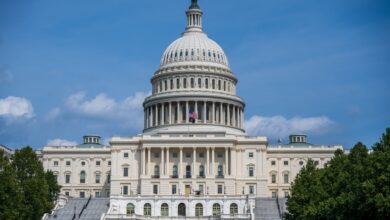


The filibuster appears nowhere in the Constitution, yet it may be the most consequential rule in Washington. It turns a simple majority into a minority veto, and it gives whichever party is losing a way to stop whatever the winning party wants. That is why each side tends to love it when out of power and resent it when in charge.
Senate Democrats are now running that cycle in reverse. After years of arguing the 60-vote threshold was a barrier to progress, they sit in the minority, where the same rule is one of the few tools that gives them leverage. With pressure building on the Republican side to scrap it, Democrats must decide how loudly to defend a rule they spent much of the last administration trying to change.

A Rule Democrats Once Wanted to Break
The party’s recent history with the filibuster is awkward. In 2013, Democrats then in the majority eliminated the 60-vote requirement for most executive branch and lower court nominees. Republicans extended that change to Supreme Court nominees in 2017. Each side has chipped away at the rule when its own priorities ran into it, and each has described the other as the one that started the erosion.
The sharpest test came during the push on voting rights legislation. Democrats held the narrowest possible majority, and many in the caucus argued that a rule from another century should not block bills on ballot access. Two Democratic senators, Joe Manchin and Kyrsten Sinema, refused to support changing the rules, and a January 2022 attempt to carve out an exception for voting legislation failed. The episode left a lasting split inside the party between those who treat the filibuster as an institution worth protecting and those who see it as an obstacle that has outlived its purpose.
Both senators have since left the chamber, and the Democratic caucus is more unified in tone. But the underlying argument never got resolved. It was simply paused because Democrats lost the majority, and a rule that blocks your agenda feels very different when it is the only thing blocking the other side’s.
Pressure From the Other Side
The renewed fight has been driven largely by Republicans. President Trump has urged GOP senators to end the filibuster, including during the recent funding standoffs, arguing that it lets the minority hold government spending hostage. Senate Republican leaders have resisted, and the reason is practical: many in their conference remember being in the minority and expect to be there again. A rule scrapped today is a rule they cannot use tomorrow.
That resistance hands Democrats an unusual position, as defenders of a rule that their opponents’ own leadership is reluctant to abandon. Any budget fight, including another stopgap spending bill, sharpens the question, because the 60-vote requirement is what forces bipartisan negotiation on funding.

The Democratic Dilemma
The strategic problem is that Democrats cannot easily say two things at once. If they defend the filibuster as a guardrail for minority rights, they weaken the case they made in 2021 and 2022, and they invite the charge that their principles follow their seat count. If they hedge, they risk giving Republicans cover to argue that even Democrats see the rule as disposable. Every public statement now doubles as a signal about what the party would do if it wins back the chamber.
Several approaches are available, and each has a cost. The first is a plain defense of the 60-vote rule, which is consistent and simple but hard to square with the party’s recent record. The second is a carve-out strategy, in which Democrats would support exceptions for specific subjects such as voting rights or abortion access. That keeps their policy goals alive but concedes that the rule is negotiable, which is the exact premise Republicans are now testing. A third option is a return to the talking filibuster, which would make opponents hold the floor in person rather than simply signal that they have the votes to block. It sounds like a middle path, but it can consume weeks of floor time and bog down everything else on the calendar.
There is also a quieter factor shaping the debate, which is how much can be done without the filibuster at all. Budget reconciliation lets a simple majority pass tax and spending measures, though the Byrd rule narrows what can be included, and the process cannot carry broad policy changes like election law. Democrats who want to preserve the rule point out that the tool already exists for fiscal priorities. Those who want it gone answer that a workaround this limited proves the point, since the major items on a party’s agenda are the ones it cannot pass. Neither argument is wrong, and that is why the caucus has struggled to settle on a single message that will hold up through the next election cycle.

The cloture threshold was 67 votes until a 1975 rule change lowered it to 60, which means the current bar is itself the product of an earlier decision to loosen the rule, not a fixed tradition. If one party can reshape it for its own purposes, what stops the next majority from finishing the job?