

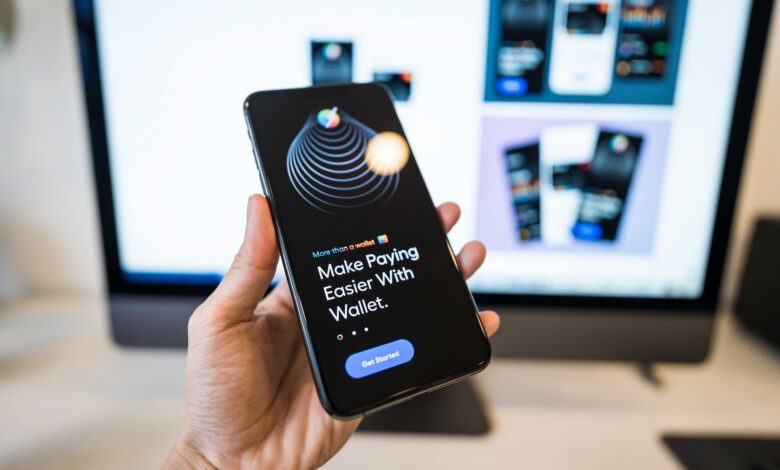
PayPal launched its own stablecoin, PayPal USD (PYUSD), in August 2023 – a dollar-pegged digital currency issued in partnership with Paxos Trust Company and built on the Ethereum blockchain. The move positioned the payments giant as the first major American financial company to issue its own stablecoin, stepping directly into a market already crowded with established players and regulatory uncertainty. For a company that has spent two decades as a trusted middleman for online transactions, the bet on PYUSD is either a sharp pivot toward the future of money or an expensive exercise in brand extension.
The logic behind PYUSD is straightforward: PayPal wants to own a piece of the infrastructure layer, not just the interface. Stablecoins have become a critical plumbing component for crypto trading, cross-border payments, and decentralized finance. By issuing its own, PayPal can earn yield on the treasury reserves backing PYUSD, collect fees on transactions, and embed itself deeper into how value moves across digital rails. What’s less clear is whether PayPal’s 400 million-plus user base will actually adopt a product that competes – often unfavorably – against better-capitalized and more deeply entrenched alternatives.

A Market That Doesn’t Wait for Newcomers
The stablecoin market is not a blank canvas. Tether (USDT) and USD Coin (USDC) together dominate the space with a combined market capitalization that dwarfs every other stablecoin in circulation. USDT alone has been operating since 2014, and its integration into virtually every crypto exchange, wallet, and DeFi protocol makes it nearly impossible to displace through sheer brand recognition. PYUSD entered this environment with a market cap that, even after months of promotion, remains a fraction of its competitors’ – a gap that reflects how deeply liquidity preferences are baked into crypto infrastructure.
There is also a trust asymmetry that PayPal underestimated at launch. Crypto-native users – the most active stablecoin traders – have historically viewed traditional financial institutions with suspicion. The same regulatory compliance and KYC requirements that make PYUSD palatable to regulators make it less attractive to users who prefer pseudonymous transactions. PayPal can freeze or reverse PYUSD transactions under certain conditions, a feature that is a selling point for compliance teams and a dealbreaker for privacy-focused users.
PayPal did make a strategically important move by expanding PYUSD to the Solana blockchain in May 2024, targeting faster settlement times and lower transaction costs than Ethereum allows. Solana’s higher throughput makes it more practical for everyday payments, which is supposedly the market PayPal is chasing. Still, expanding to a second blockchain does not automatically generate the organic demand that comes from years of deep integration across trading pairs and liquidity pools.
Regulatory Tailwinds and What They Actually Mean
The regulatory environment around stablecoins is shifting, and that shift genuinely helps PayPal’s case. Legislative efforts in the United States to create a clear stablecoin framework – including proposed bills that would require issuers to hold one-to-one reserves in high-quality liquid assets – play directly to PayPal’s strengths. The company already operates under extensive financial regulation, maintains transparent reserve disclosures, and has the compliance infrastructure most crypto-native issuers would need years and significant capital to build. If Congress eventually passes stablecoin legislation that imposes strict requirements on issuers, PayPal could find itself with a structural advantage over competitors scrambling to retrofit compliance.
That said, regulatory clarity is not the same as regulatory favorability. Stricter rules could also invite banks directly into the stablecoin market, and banks carry something PayPal lacks: deposit insurance, charter authority, and a century of consumer trust around holding money. Several large American banks are reportedly exploring their own dollar-pegged digital currencies, and their entry could squeeze PYUSD from both directions – legacy crypto stablecoins from one side, bank-issued tokens from the other.
The Payments Use Case: Genuine or Wishful?
PayPal’s strongest argument for PYUSD is not crypto trading but payments – specifically, the cost and speed of cross-border transfers. Traditional wire transfers can take days and carry fees that eat meaningfully into smaller transaction amounts. Stablecoins settle in seconds and can move across borders without a correspondent banking chain. For PayPal, which already handles cross-border payments for freelancers, small businesses, and international shoppers, embedding PYUSD into that flow could genuinely reduce friction and cost. The company has already enabled PYUSD for peer-to-peer transfers within its app and on Venmo, which is the closest thing to a real-world payment test it has run at scale.
Adoption numbers from those features remain modest by PayPal’s own standards. The company has not disclosed how many users have actively transacted with PYUSD versus simply holding it, and that distinction matters enormously. Holding a stablecoin in a wallet is passive. Using it to pay a contractor in Manila or split a restaurant bill on Venmo requires behavior change, and behavior change is where payment products either succeed or quietly stall. PayPal has an uneven track record here – Venmo took years to monetize despite massive user numbers, and its crypto trading features, launched in 2021, never generated the engagement the company projected.
The merchant side of the equation is equally complicated. For PYUSD to become a payments currency rather than a speculative or treasury asset, merchants need a reason to accept it over credit cards, ACH transfers, or even USDC. Right now, that reason doesn’t clearly exist. PayPal has relationships with millions of merchants and could theoretically incentivize PYUSD acceptance through lower processing fees – a move that would cost the company margin in the short term but build genuine utility. Whether PayPal is willing to make that trade-off is an open question, and nothing in its current pricing structure suggests it is moving in that direction.

What PayPal has in its favor that pure-crypto competitors cannot replicate is distribution – real, regulated, mainstream distribution. The company sits inside the checkout flow of a significant portion of global e-commerce, and that positioning alone gives PYUSD a viable path that a startup stablecoin issuer would spend a decade trying to build. Whether that distribution advantage is enough to close the gap with Tether and USDC, or whether PayPal ends up as a compliant but marginal player in a market it helped legitimize for others, may hinge on whether the company treats PYUSD as a core product or a checkbox. The difference between those two strategies shows up not in press releases but in fee structures, developer support, and how aggressively PayPal is willing to cannibalize its own existing payment margins to push adoption. So far, the evidence for the bolder path is thin.