

Deals Stalled, Timelines Shredded
When the U.S. government tightened export controls on Nvidia’s most advanced AI chips, the immediate casualties were not just quarterly revenue projections. Across the Gulf states – Saudi Arabia, the UAE, and Qatar – multi-billion-dollar AI infrastructure deals that had been years in the making suddenly hit a regulatory wall. Procurement pipelines froze. Data center construction schedules slipped. And sovereign wealth funds that had committed capital to AI buildouts found themselves holding agreements that could no longer be fulfilled on the terms originally negotiated.
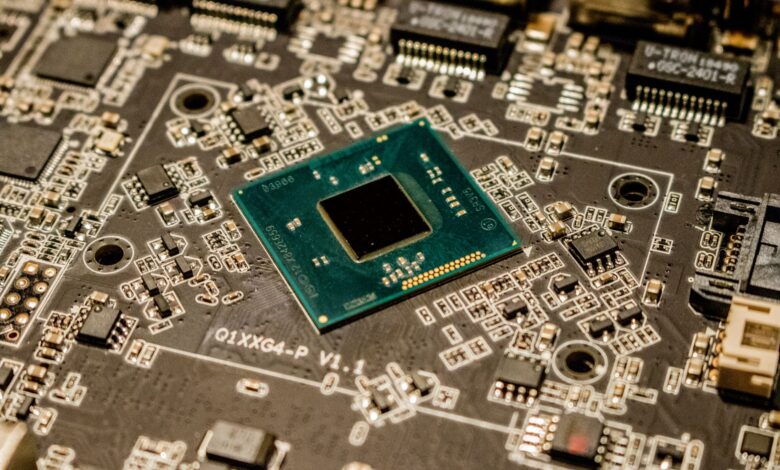
The export restrictions target Nvidia’s H100 and A100 series chips, along with the newer Blackwell architecture, placing them under licensing requirements that effectively bar unrestricted sales to a broad range of countries outside the U.S., a handful of European allies, and a select tier of trusted partners. The Middle East, despite its enormous purchasing power and stated ambitions to become a global AI hub, does not currently sit in that trusted tier.
That single regulatory fact is reshaping the entire arc of Gulf AI investment.
Why the Gulf Was So Far Along
Saudi Arabia’s Vision 2030 program had placed AI infrastructure at the center of its economic diversification strategy. The UAE’s AI ministry – one of the first of its kind anywhere in the world – had spent years cultivating partnerships with American tech firms, including direct conversations with Nvidia about large-scale chip acquisitions. These were not exploratory discussions. They were advanced procurement conversations, complete with financing structures and deployment timelines. The scale being discussed in some cases ran into tens of thousands of H100 units, enough to power national-scale model training and inference operations.
The appeal was straightforward from both sides. Nvidia wanted to sell. Gulf sovereign funds and state technology entities wanted to build. The region has the capital, the stated policy priority, and the physical infrastructure – particularly around power and cooling – to absorb large GPU clusters far faster than many Western buyers. Several Gulf states had also begun constructing purpose-built AI campuses specifically to house this kind of hardware, with development moving ahead even before the chip purchase agreements were finalized.
Those campuses are still being built. The chips, for now, cannot legally arrive in the volumes originally planned.

The Diplomatic and Commercial Tangle
The U.S. government’s position is not arbitrary. The concern driving the restrictions is that advanced AI chips sold to Gulf states could be re-exported to China or other restricted countries, either directly or through opaque intermediary channels. It is a legitimate concern – chip diversion has already been documented in other contexts – but it places Gulf governments in a frustrating position. They are U.S. allies in most meaningful geopolitical respects, they host American military installations, and they have publicly aligned themselves with Western AI governance norms. Being grouped, in practical terms, with sanctioned states is something Gulf officials have pushed back against in both public forums and private diplomatic channels.
Nvidia, for its part, is caught between its largest potential growth market and the legal boundaries set by the Bureau of Industry and Security. The company cannot simply negotiate its way around export law, and any attempt to structure workarounds – through subsidiaries, licensing arrangements, or third-party distribution – carries serious legal exposure. The result is a company watching enormous potential revenue sit just out of reach while competitors from China, Europe, and even domestic Gulf chip initiatives start filling the vacuum. This is not an abstract competitive risk. Huawei’s Ascend series is actively being pitched to Gulf AI programs as a Nvidia substitute, and some buyers are listening.
The broader chip supply chain dynamic is worth watching here. Taiwan Semiconductor’s Arizona expansion is partly motivated by the need to give U.S. chip companies domestically produced supply chains that are easier to defend under export control frameworks – but that build-out takes years, and it does nothing to resolve the Gulf situation today.
What Comes Next and What Gets Lost
Some Gulf buyers are pursuing workarounds within the law. Cloud access arrangements – where Gulf entities buy compute time on U.S.-based servers running Nvidia hardware, rather than importing physical chips – technically sidestep the hardware export issue. Microsoft, Google, and Oracle have all been in active discussions about this model with Gulf sovereign tech entities. It is a functional compromise, but a deeply unsatisfying one for governments that want to own their AI infrastructure rather than rent it, and that have explicitly framed AI sovereignty as a national security priority. Renting compute from American hyperscalers is, from that perspective, the opposite of sovereignty.
There is also a harder political question forming beneath the commercial one. The export restrictions were designed in part to keep advanced AI capability concentrated among U.S. allies and within U.S. influence. But if Gulf states, frustrated by access restrictions, begin deepening their AI partnerships with Chinese firms – not out of ideological preference but out of procurement necessity – the policy could produce the exact outcome it was designed to prevent. That tension has not been resolved in Washington, and there are genuine disagreements within the U.S. government about whether the current restriction framework is calibrated correctly.

For now, the construction crews are still pouring concrete at AI campus sites across Riyadh and Abu Dhabi, building facilities designed around hardware that has not yet been cleared to ship – and no one in Washington has publicly committed to a timeline for when, or whether, that clearance will come.