

Lyft’s Long Game Gets a New Engine
Lyft has spent years playing second fiddle to Uber, and nobody in the industry has pretended otherwise. But a string of robotaxi partnerships announced over the past several months has quietly shifted the math on what Lyft’s future could look like – without requiring the company to build a single autonomous vehicle of its own.
The company has struck deals with autonomous vehicle operators including Mobileye, May Mobility, and Marubeni to deploy self-driving rides on its platform. Rather than competing in the capital-intensive race to develop AV technology, Lyft is positioning itself as the distribution layer – the app where passengers hail autonomous rides while the hardware and software belong to someone else. It is a bet on a different kind of leverage.

Why the Asset-Light AV Model Makes Sense Now
The economics of building autonomous vehicles from scratch have humbled far better-funded companies. General Motors poured billions into Cruise before a series of safety incidents and regulatory setbacks forced a dramatic pullback. Waymo, backed by Alphabet’s deep pockets, has been running commercial robotaxi service in select cities for years and still operates in a handful of markets. For a company like Lyft, which has never had Uber’s financial runway, the idea of competing in that arena directly was never realistic.
What Lyft is doing instead is treating the AV space the way streaming platforms treat content studios – as a supply source, not a core competency. The company provides the consumer interface, the rider base, and the operational infrastructure. The AV partners provide the vehicles. If autonomous technology works at scale, Lyft captures margin without the liability of owning a fleet or employing drivers. If it doesn’t, the company has not burned through development capital to find that out.
That structure also gives Lyft something it has historically lacked: a story about long-term unit economics. Traditional rideshare margins are squeezed between driver pay, insurance costs, and price competition. Autonomous vehicles, at least in theory, remove the largest variable cost – the driver. Each robotaxi mile becomes dramatically cheaper to operate once the platform overhead is absorbed, which means profitability at scale looks different than it does today.
The Uber Comparison Is Complicated
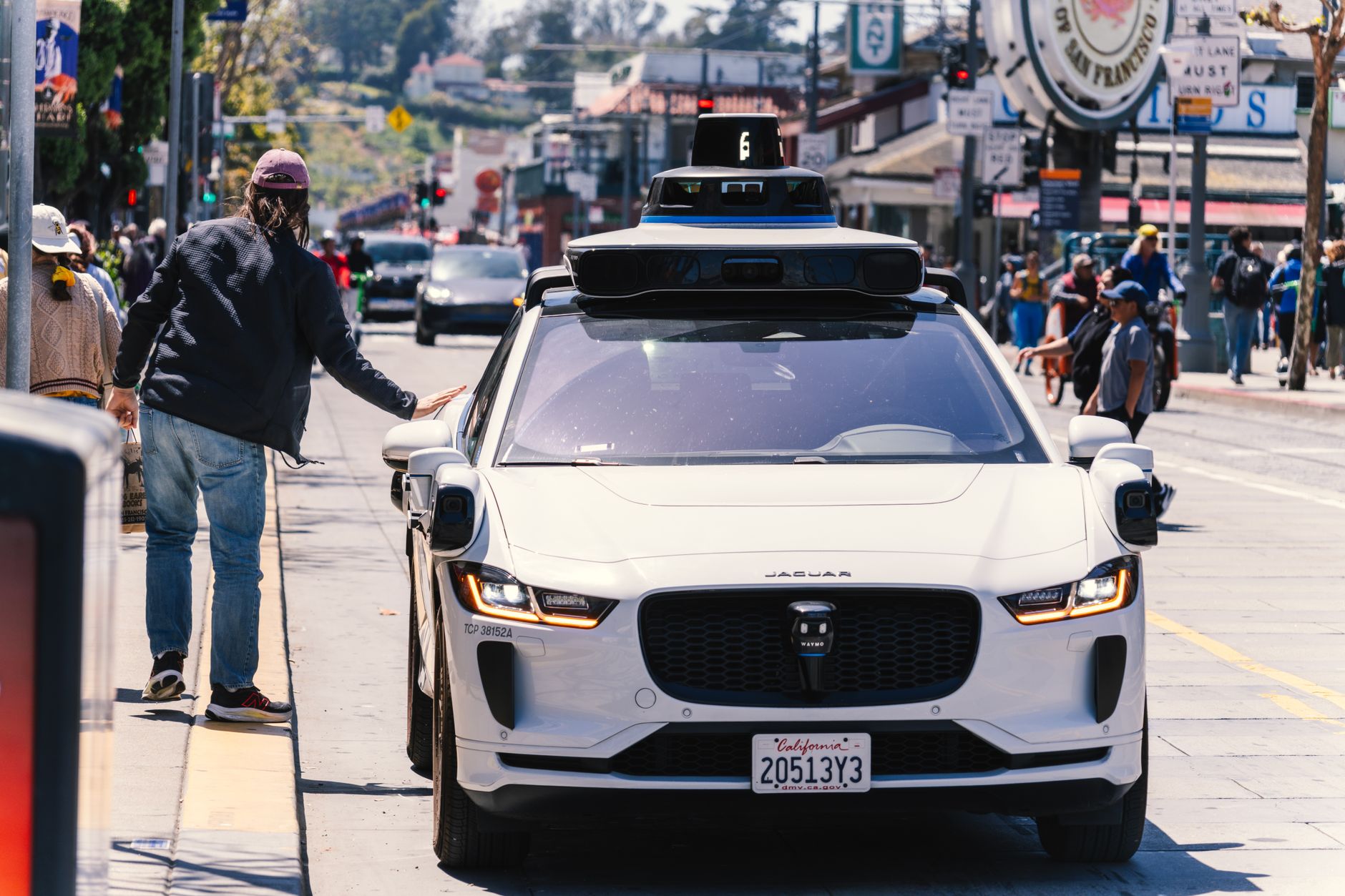
Uber has its own AV strategy, centered largely on its partnership with Waymo, which began offering Uber-branded autonomous rides in Austin earlier this year. Uber sold its own self-driving division, ATG, to Aurora back in 2020, making a similar bet that partnerships would outperform internal development. So both companies have landed in roughly the same philosophical place – but Uber got there first, and its network is still significantly larger.
Volume matters enormously in rideshare. Uber’s density of riders and drivers in core markets creates a flywheel that Lyft struggles to replicate. When an AV operator chooses where to deploy its fleet, it will naturally gravitate toward platforms with more rides to fill. Lyft’s partnership strategy only narrows the gap with Uber if the company can actually attract enough AV operators to diversify its supply – and if those operators find Lyft’s network worth integrating into alongside Uber, rather than instead of it.
Reading the Partnership Terms Carefully
Not all of Lyft’s announced AV deals are at the same stage of maturity. Some are signed agreements with commercial deployment timelines, while others are earlier-stage memoranda of understanding – frameworks for future cooperation rather than binding operations. The distinction matters, because the gap between an MOU and actual robotaxi rides on the app can span years, regulatory shifts, and technology readiness hurdles that neither party fully controls at signing.
May Mobility, for instance, operates fixed-route autonomous shuttles in a handful of mid-size cities – a model quite different from on-demand urban rideshare. Scaling that technology to work as a true Lyft replacement in a dense metro area is a different engineering and operational challenge. Mobileye’s robotaxi ambitions have similarly faced timeline revisions. Lyft’s deal flow looks impressive on a press release; what it produces in ride volume by 2026 is a harder question.
Marubeni’s involvement adds another dimension – the Japanese conglomerate brings capital and fleet-management experience, which suggests Lyft is thinking about international deployment potential, not just domestic growth. A diversified AV supply chain across geographies could eventually give Lyft a meaningful foothold in markets where Uber’s dominance is less entrenched. Southeast Asia and parts of Europe, where AV regulation is evolving quickly, are the markets most worth watching in this context.

There is also the question of who actually controls the customer relationship in an autonomous ride. When a passenger books a robotaxi through the Lyft app, Lyft owns the booking, the payment, and the data. That data – where people go, when, how often – is exactly what makes a rideshare platform valuable to advertisers, city planners, and future service offerings. Lyft retaining that layer while AV operators handle the physical ride could be the most durable part of this model, assuming the company protects those terms as partnerships mature and AV operators grow powerful enough to negotiate harder. Waymo has already moved to build its own direct consumer app in parallel to its Uber arrangement, which suggests AV operators are not entirely comfortable staying in a wholesale supplier role forever.
Frequently Asked Questions
What robotaxi partnerships has Lyft announced?
Lyft has announced partnerships with Mobileye, May Mobility, and Marubeni to deploy autonomous vehicles on its platform, with varying stages of commercial readiness.
How does Lyft’s AV strategy differ from Uber’s?
Both companies rely on third-party AV operators rather than building their own technology, but Uber’s partnership with Waymo is more commercially advanced and operates within a much larger rider network.