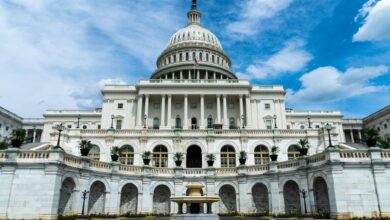


The highest court in the land stands at a crossroads that could reshape how Americans interact online. The Supreme Court has agreed to hear a case that will determine whether social media platforms can be regulated like traditional public utilities, marking the most significant tech policy decision in decades.
The case, NetChoice v. Paxton, centers on Texas legislation that prohibits large social media companies from removing content based on political viewpoints. The law treats platforms like Facebook, Twitter, and YouTube as “common carriers” – similar to telephone companies – requiring them to host all legal speech without editorial discretion.
Tech industry groups argue this violates the First Amendment rights of private companies to curate content on their platforms. Meanwhile, supporters claim these platforms have become essential public forums that require neutral moderation policies.

The Constitutional Battleground
At the heart of this dispute lies a fundamental question about free speech in the digital age. The Texas law emerged from conservative frustrations over perceived censorship of right-wing voices on major platforms. Republican lawmakers, who have been vocal about these concerns following various political developments including recent leadership battles within the party, argue that social media giants wield too much power over public discourse.
The legislation specifically targets platforms with more than 50 million monthly users, requiring them to publicly disclose their content moderation policies and provide appeals processes for removed posts. Companies would face significant fines for non-compliance, creating a direct conflict with current business practices.
Legal scholars describe this as a clash between two competing interpretations of the First Amendment. Traditional doctrine holds that private companies have editorial rights over their platforms, similar to newspapers choosing which letters to publish. However, the new approach argues that social media platforms have become so central to public communication that they should be treated as neutral conduits for speech.
The Biden administration has taken a measured stance, acknowledging concerns about platform power while opposing blanket restrictions on content moderation. Justice Department briefs emphasize the importance of allowing companies to remove harmful content like misinformation and harassment.
Industry Stakes and Economic Impact
The ruling could fundamentally alter the business models of major tech companies. Current content moderation systems, which rely heavily on automated detection and human review teams, exist partly to create advertiser-friendly environments. Brands typically avoid associating with controversial content, making moderation essential for revenue generation.
Meta, Google, and other platform operators argue that forced neutrality would flood their services with spam, harassment, and extremist content. They point to the evolution of platforms like Parler and Gab, which adopted minimal moderation approaches and subsequently struggled with user safety and advertiser acceptance.
The economic implications extend beyond individual companies. Social media advertising represents a multi-billion dollar industry that depends on brand safety measures. Marketing executives express concern that reduced content control could drive advertising dollars toward traditional media or emerging platforms with stronger moderation capabilities.

Smaller social media companies face a different set of challenges. While the Texas law only applies to platforms with 50 million users, similar legislation in other states could create a patchwork of regulations that smaller companies lack resources to navigate. Industry analysts suggest this could inadvertently strengthen the dominance of existing tech giants.
Global Implications and Precedent
The Supreme Court’s decision will likely influence international approaches to social media regulation. European Union leaders have closely watched American debates over platform governance as they implement their own Digital Services Act, which takes a different approach by requiring risk assessments and transparency reports rather than content neutrality.
Countries with more restrictive speech laws view the case as a test of whether democratic nations can effectively regulate global platforms. Some observers note parallels to recent political shifts in Europe, where traditional alliances face new pressures and established institutions confront changing public expectations.
The timing coincides with ongoing debates about American tech leadership on the global stage. Chinese platforms like TikTok have gained significant market share while operating under different regulatory frameworks, creating competitive dynamics that inform policy discussions.
Legal experts anticipate that whatever precedent emerges will influence how other democracies balance free speech protections with platform accountability. Australia, Canada, and the United Kingdom have all proposed or implemented social media regulations that could be affected by American court decisions.
What Comes Next
Oral arguments are scheduled for early next year, with a decision expected by summer. Court watchers note that the current justices have shown interest in technology cases, though their previous rulings don’t clearly indicate how they might approach this particular conflict.

The case arrives as public opinion surveys show growing bipartisan concern about social media’s influence on political discourse. However, Americans remain divided on solutions, with conservatives favoring neutrality requirements and liberals supporting stronger measures against misinformation and hate speech.
Industry groups are preparing for multiple scenarios, including the possibility of a narrow ruling that applies only to specific types of content moderation or a broader decision that reshapes platform liability entirely. Tech companies have reportedly increased their legal and lobbying expenditures in anticipation of the decision’s impact.
The Supreme Court’s ruling in NetChoice v. Paxton will likely establish the legal framework for social media governance for years to come. As digital platforms continue evolving and new technologies emerge, this decision will serve as a cornerstone for future regulatory approaches, affecting how millions of Americans express themselves and consume information online.
Frequently Asked Questions
What is the NetChoice v. Paxton case about?
It’s a Supreme Court case challenging Texas legislation that would treat large social media platforms as common carriers, prohibiting content moderation based on political viewpoints.
How could this ruling affect social media users?
The decision could change how platforms moderate content, potentially leading to less content removal or more government oversight of platform policies.