
Major Hurricane Milton Makes Landfall in Florida Causing Widespread Power Outages


Hurricane Milton slammed into Florida’s Gulf Coast as a major Category 3 storm, bringing devastating winds exceeding 120 mph and leaving millions without power across the state. The massive storm made landfall near Siesta Key around 8:30 PM local time, marking one of the most significant hurricane impacts Florida has experienced this decade.
Emergency management officials reported that Milton’s eyewall produced catastrophic storm surge reaching up to 15 feet in some coastal areas, while tornado warnings blanketed central Florida as the storm’s outer bands spawned dangerous spinning cells. The National Hurricane Center described Milton as an “extremely dangerous” system with a well-defined eye and symmetrical structure that maintained its intensity right up to landfall.

Massive Power Grid Failures Leave Millions in Dark
Florida’s electrical infrastructure buckled under Milton’s assault, with utility companies reporting unprecedented outage numbers across multiple counties. Duke Energy, Florida Power & Light, and Tampa Electric collectively lost service to over 3.2 million customers as transmission lines snapped and substations flooded under the storm’s fury.
The hardest-hit regions include Sarasota, Manatee, and Hillsborough counties, where outage rates exceeded 90 percent in some communities. Tampa Bay area residents experienced complete blackouts as Milton’s sustained winds toppled centuries-old oak trees onto major power corridors. Florida Power & Light spokesman David Reuter confirmed that restoration efforts would not begin until wind speeds dropped below 39 mph for sustained periods.
“We’re dealing with catastrophic damage to our transmission system,” Reuter stated during an emergency briefing. “Some areas may remain without power for weeks, not days.” The utility companies had pre-positioned thousands of line crews from neighboring states, but the scope of destruction exceeded initial projections.
Critical infrastructure including hospitals, water treatment plants, and emergency services switched to backup generators, though several facilities reported fuel supply concerns as Milton’s prolonged passage prevented resupply operations.
Storm Surge Devastates Coastal Communities
Milton’s storm surge proved as destructive as forecasters warned, with barrier islands experiencing record-breaking water levels that obliterated beachfront properties and pushed debris miles inland. Venice, Englewood, and Fort Myers Beach bore the brunt of the surge, which peaked during high tide cycles and overwhelmed sea walls designed for smaller storms.
Coast Guard rescue teams launched swift-water rescue operations before dawn, plucking stranded residents from rooftops and second floors as surge waters inundated entire neighborhoods. Emergency management director Kevin Guthrie reported that search and rescue teams had completed over 400 rescues in the first six hours after landfall, with operations continuing despite dangerous conditions.
The surge’s impact extended far beyond immediate coastal zones, as Milton’s massive wind field pushed water up rivers and into inland communities that rarely experience flooding. The Peace River, Myakka River, and Caloosahatchee River all reached major flood stage, forcing additional evacuations in areas that initially seemed safe from the storm’s primary impacts.
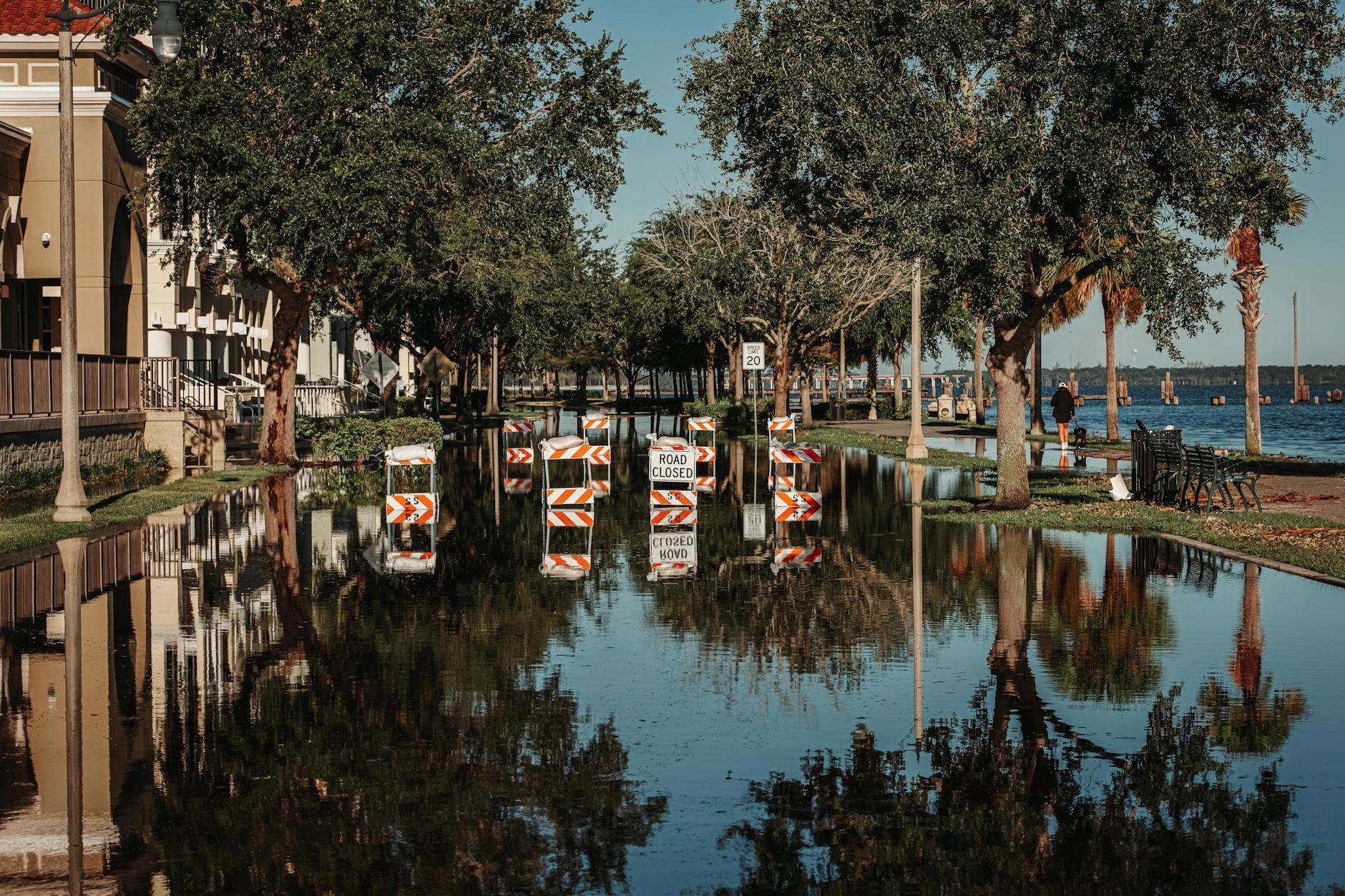
Bridge inspections began immediately after the storm passed, with the Sunshine Skyway Bridge and several smaller spans sustaining visible damage from wind-driven debris. Transportation officials warned that many coastal roadways remained impassable due to sand deposits and structural damage from the surge.
Widespread Infrastructure Damage Hampers Recovery
Milton’s prolonged passage across central Florida left a trail of destruction that extends well beyond power outages and coastal flooding. Major highways including Interstate 75 and Interstate 4 suffered significant damage from fallen trees and debris, creating transportation nightmares for emergency responders and evacuees attempting to return home.
Orlando International Airport suspended all operations indefinitely as multiple hangars sustained roof damage and flooding affected terminal buildings. Tampa International Airport similarly remained closed, with runway inspections revealing debris damage that will require extensive clearing operations before commercial flights can resume.
The storm’s impact on Florida’s agricultural sector appeared severe, with preliminary assessments showing widespread damage to citrus groves, cattle ranches, and vegetable farms across multiple counties. Agricultural officials estimated that wind damage alone destroyed significant portions of the upcoming harvest season, potentially affecting food supply chains nationwide.
Communication networks also suffered extensive damage, with cell towers down across large swaths of central Florida. Verizon, AT&T, and T-Mobile all reported significant service disruptions, complicating rescue operations and leaving families unable to contact loved ones. Emergency management agencies activated satellite communication systems to coordinate response efforts, but civilian communications remained severely limited.
Similar to other recent infrastructure disasters, including the Major Oil Pipeline Explosion Forces Mass Evacuations in Oklahoma, Milton’s impact highlighted the vulnerability of critical systems to extreme weather events.

Recovery Efforts Begin Despite Ongoing Challenges
Federal Emergency Management Agency teams began deploying resources even before Milton completely cleared the state, with disaster declaration procedures fast-tracked to unlock federal funding for affected communities. President Biden approved major disaster declarations for multiple Florida counties, enabling individual assistance programs and public infrastructure repairs.
The American Red Cross established emergency shelters across the region, though many facilities operated on generator power as electrical grid restoration continued. Supply chains faced significant disruption, with many grocery stores and gas stations remaining closed due to power outages and impassable roads.
Weather forecasters warned that Milton’s aftermath would include continued hazards, as saturated ground conditions increased the risk of additional tree failures and flooding from even minor rainfall events. The National Weather Service maintained flood warnings for multiple river systems that could remain at dangerous levels for several days.
Recovery efforts face a long road ahead, with some communities potentially requiring months to fully restore essential services. The combination of power grid damage, infrastructure destruction, and widespread debris fields creates challenges similar to those experienced during previous major hurricanes, though Milton’s particular impact on the electrical system may prove among the most severe in Florida’s history.
As dawn breaks over a transformed Florida landscape, the true scope of Hurricane Milton’s destruction becomes clear, setting the stage for what will likely be one of the most extensive disaster recovery operations in the state’s recent memory.
Frequently Asked Questions
How many people lost power from Hurricane Milton?
Over 3.2 million customers across multiple Florida counties experienced power outages from Hurricane Milton’s impact.
Where did Hurricane Milton make landfall?
Hurricane Milton made landfall near Siesta Key, Florida as a Category 3 storm with winds exceeding 120 mph.