


Amazon Enters the Satellite Internet Race With Real Infrastructure
Amazon has spent years quietly building Project Kuiper, its satellite broadband network, and the program is no longer theoretical. The company has launched its first batch of production satellites and is pushing toward full commercial service, setting up a direct collision with SpaceX’s Starlink – which has spent those same years building a commanding lead in customers, coverage, and brand recognition.
What makes this moment different from earlier Amazon announcements is the hardware. Production satellites are in orbit, ground infrastructure is being tested, and Amazon has committed to deploying thousands of satellites under Federal Communications Commission licensing requirements. The company faces a hard deadline: it must launch a substantial portion of its constellation by mid-decade or risk losing its spectrum rights. That regulatory clock is functioning as a forcing mechanism that no amount of corporate strategy can override.

Starlink’s Head Start Is Bigger Than It Looks
Starlink already serves millions of subscribers across more than 100 countries. It has operational experience in maritime, aviation, military, and rural residential markets that Kuiper cannot replicate from a standing start. SpaceX has also been iterating on its satellite hardware for years, driving down per-unit cost and improving performance in ways that create a steep learning curve for any new entrant trying to match its service quality at a competitive price.
Speed alone does not explain the advantage. Starlink’s edge comes from the feedback loop between deployment scale and subscriber data. More satellites mean better coverage windows; more subscribers mean more real-world performance data, which feeds engineering improvements. Kuiper is entering a market where the incumbent has already run that experiment at scale and absorbed the expensive lessons.

Where Amazon Thinks It Can Win
Amazon is not trying to win by being first. The strategy is built around being embedded. Amazon Web Services is already the dominant cloud infrastructure provider for a significant share of global enterprises, governments, and developers. If Kuiper can offer direct satellite-to-cloud connectivity that routes traffic straight into AWS with lower latency than terrestrial alternatives, that is a value proposition Starlink structurally cannot match – SpaceX has no equivalent cloud backbone.
The enterprise and government market is where this calculation gets interesting. A logistics company already running its operations on AWS, or a government agency with classified cloud workloads, might find Kuiper’s integrated connectivity worth paying a premium for, even if Starlink’s raw download speeds are comparable. Bundling connectivity with compute is a different kind of sales motion than selling broadband subscriptions door-to-door.
Amazon’s retail and device ecosystem gives it another angle. The company controls a massive consumer distribution channel through Amazon.com, Prime memberships, and partnerships with device manufacturers. Starlink sells primarily through its own website and a relatively thin distribution network. If Amazon can fold Kuiper connectivity into existing hardware partnerships or consumer device categories, the acquisition cost per subscriber could look very different than Starlink’s model.
There is also a geographic play. Starlink has prioritized markets where it can charge premium prices – rural North America, Western Europe, maritime shipping lanes. Amazon, with its global logistics footprint and established relationships in emerging markets, may be positioned to offer connectivity in regions where Starlink’s pricing or regulatory situation creates friction. That does not guarantee success, but it opens a lane that Starlink has not fully occupied.
SpaceX Is Not Standing Still
Starlink is not a static target. SpaceX has been developing its next-generation satellite hardware, has secured contracts with major airlines and maritime operators, and is reportedly working on direct-to-cell capabilities that would let standard smartphones connect to the constellation without specialized equipment. That last capability, if delivered at scale, would reach a category of users no satellite broadband provider has ever effectively addressed.
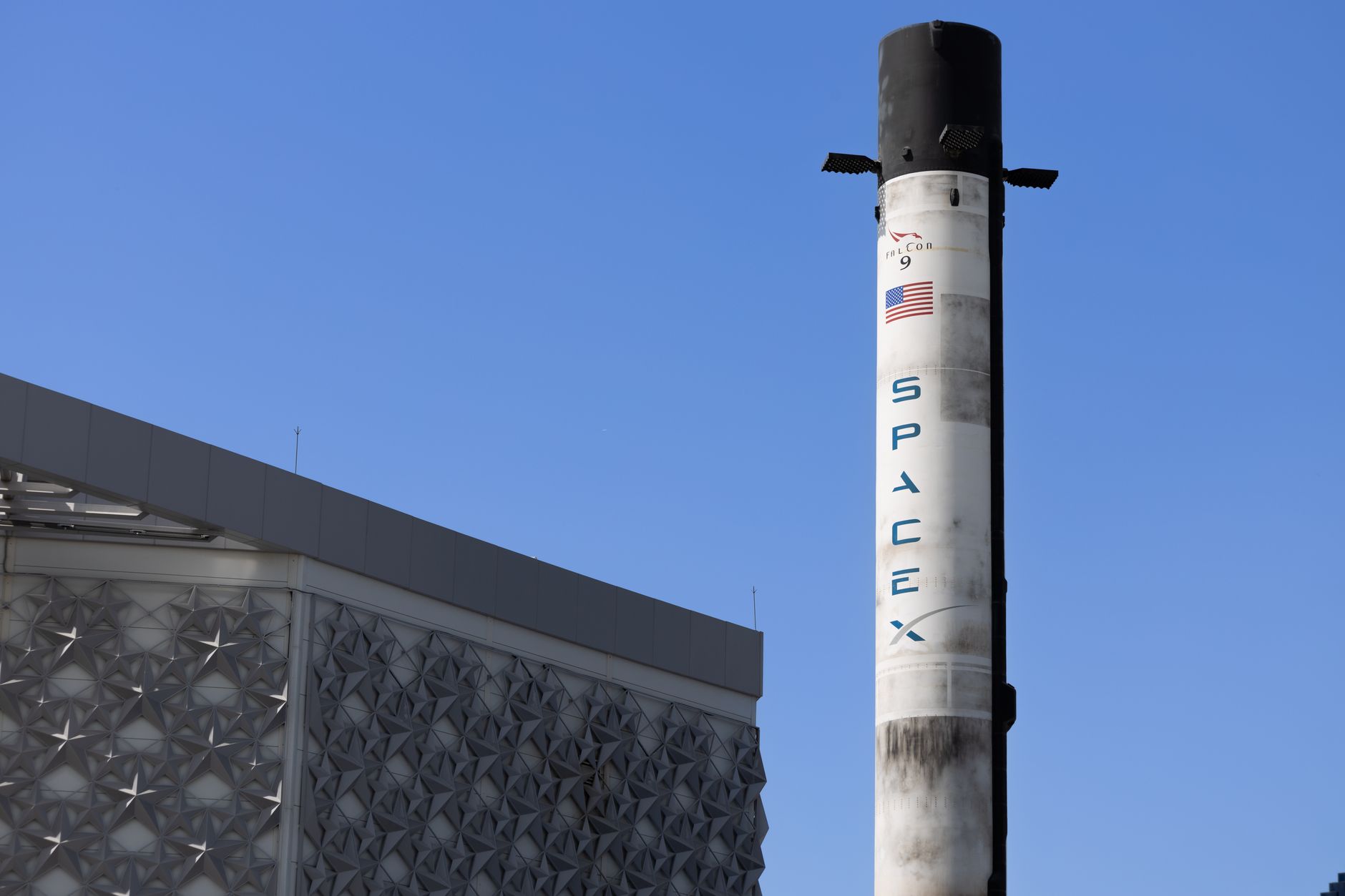
SpaceX also has a launch cost structure that Kuiper cannot match. Because SpaceX builds and flies its own rockets, deploying and replenishing the Starlink constellation costs a fraction of what any competitor using third-party launch services would pay. Amazon has invested in its own launch capabilities through Blue Origin and has contracts with other providers, but the per-kilogram launch cost gap between Falcon 9 and its alternatives remains substantial. That matters when you are talking about deploying thousands of satellites and periodically replacing aging hardware in orbit.
The Market Is Big Enough – But Not Infinitely Forgiving
Global demand for broadband connectivity, particularly in rural and underserved markets, is large enough that two major satellite networks can theoretically coexist profitably. The question is not whether Kuiper can find customers, but whether it can find them fast enough and at a cost structure that makes the multi-billion dollar investment defensible to Amazon shareholders. Building and launching a full satellite constellation is not a project that tolerates years of underperformance while management figures out the go-to-market strategy.
Amazon’s financial position means it can absorb losses during a build-out phase longer than almost any other company on earth. But that durability is not the same as inevitability. Starlink’s subscriber base generates revenue that funds ongoing development, and SpaceX’s launch business provides cash flow that is structurally independent of whether Starlink ever turns a profit on its own. Amazon is betting that its AWS integration story, combined with brute-force capital deployment, can close a gap that has been widening for several years – and it has to make that case to regulators, partners, and investors at the same time it is trying to put hardware in space.
The FCC spectrum clock means Amazon cannot wait for perfect conditions. It has to launch, deploy, and sell on a schedule set by a government agency, not by market readiness. That pressure is exactly the kind of constraint that forces organizations to make decisions faster than they would prefer – which is either the thing that accelerates Kuiper into a real competitor, or the thing that exposes how much harder satellite broadband is to operate than it is to announce.
Frequently Asked Questions
What is Amazon’s Project Kuiper?
Project Kuiper is Amazon’s satellite internet constellation program, designed to provide broadband connectivity globally and compete directly with SpaceX’s Starlink network.
How does Kuiper differ from Starlink strategically?
Kuiper’s core strategy centers on integration with Amazon Web Services, giving it a cloud connectivity angle that Starlink cannot match, targeting enterprise and government customers alongside consumers.